Inventors of Next Generation Sequencing honoured by Royal Society
Courtesy Royal Society
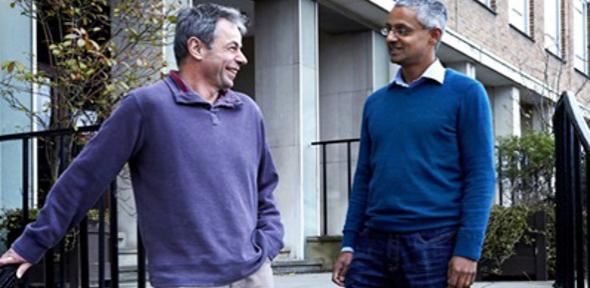
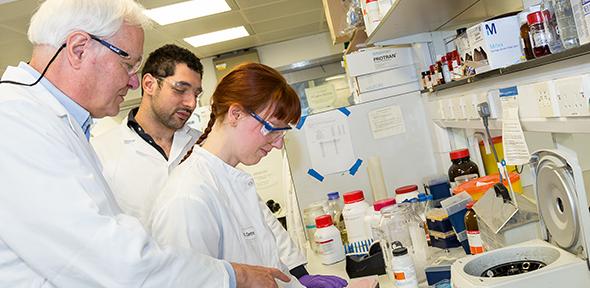
The Royal Society has awarded one of its highest honours jointly to Professor Sir Shankar Balasubramanian and Professor David Klenerman, for their development of next generation DNA sequencing.
Royal Society honours researcher's 'pioneering leadership'
The Royal Society's prestigious Davy Medal goes this year to an atmospheric chemist who has shown "pioneering leadership" in furthering our understanding of the depletion of the ozone layer and the substances that destroy it.
The department is pleased to announce that Dr James Keeler is to be our new Head of Department. He will succeed the outgoing Head, Professor John Pyle, as from 1 October.
Simple blood test kit for kidney patients moves closer
Image courtesy of the Department of Chemistry
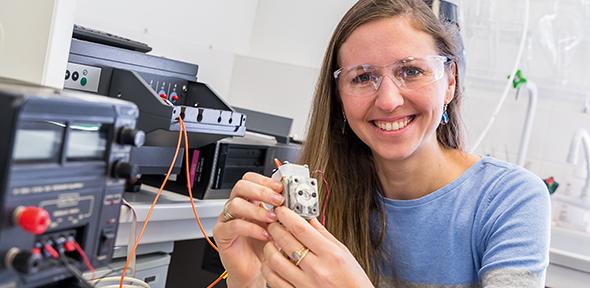
A simple home blood-testing kit to help kidney patients check that their potassium levels are not dangerously high or low is being developed by a scientist here.
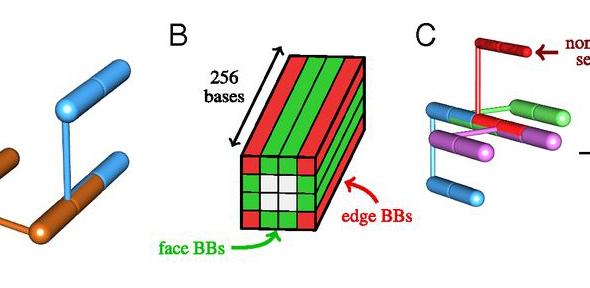
Optimising self-assembling molecular structures for use in diagnostics
Researchers probing the mysteries of how DNA molecules can self-assemble into complex structures have found ways of tuning the assembly process to make it more efficient and significantly faster.
Researchers join new initiative on urban air pollution
Image courtesy of the Department of Chemistry
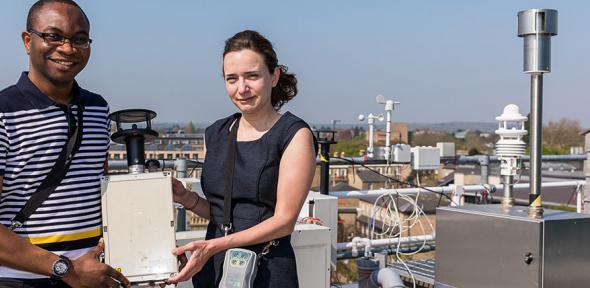
Researchers here are part of a cutting-edge new project unveiled by Mayor of London Sadiq Khan today to better understand Londoners’ exposure to air pollution and improve air quality in the capital.
Researchers are now moving into our new Chemistry of Health building – a state-of-the-art space for the study of neurodegenerative disorders such as Parkinson’s and Alzheimer’s diseases – which is just being completed.
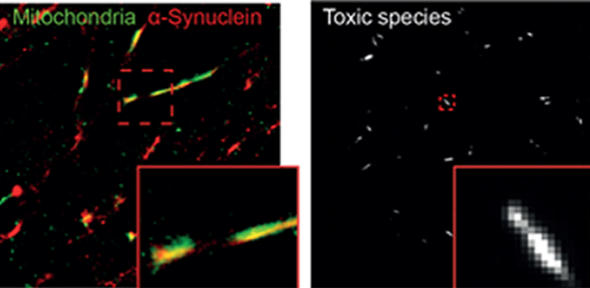
Scientists unravel molecular mechanisms of Parkinson’s disease
Detailed brain cell analysis has helped a group of researchers - including scientists here in the Department of Chemistry - uncover new mechanisms thought to underlie Parkinson's disease.
A leading reseacher whose work has helped bring vital advances in our understanding of Alzheimer's and Parkinson's diseases has received a knighthood in the Queen's Birthday Honours.
"I really hope the issue of indoor air pollution will attract more attention now. It’s a significant part of our exposure to pollution, because we spend 90% of our time indoors, and particularly affects children."
Sandile Mtetwa wants to transform the energy sector in her country. She'll begin a PhD here this autumn, investigating alternative energy sources that can produce and store hydrogen and could give Zimbabwe access to cost effective solar energy.
PhD student Jerelle Joseph in the gym at Churchill College (photo: Nick Saffell)
Congratulations to our PhD student Jerelle Joseph who has jointly won the sixth annual Bill Gates Sr. Award in recognition both of her outstanding research and her social leadership.
Brain cholesterol associated with increased risk of Alzheimer's disease
Researchers led by our own Professor Michele Vendruscolo have shown how cholesterol – a molecule normally linked with cardiovascular diseases – may also play an important role in the onset and progression of Alzheimer’s disease.
Researchers here have successfully modified a well-known chemical reaction in such a way that it can produce drug molecules in a purer and more effective form.