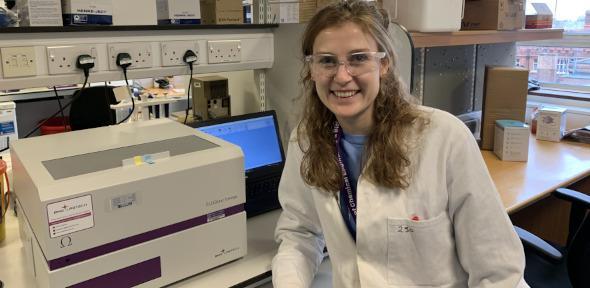
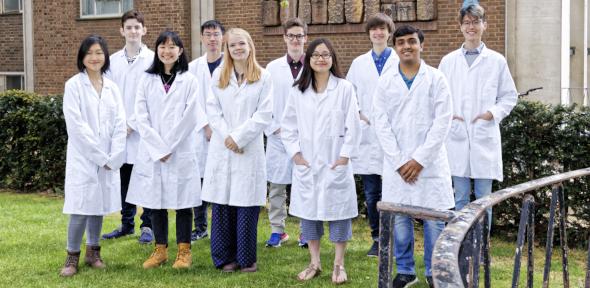
Amongst the twenty three selected US Scholars-elect is Nisita Dutta who will start a PhD in chemistry in 2022. We offer a warm welcome to Nisita who will join the Bernardes lab.
Sandile Mtetwa Curates Our Twitter for the International Day for Women in Science
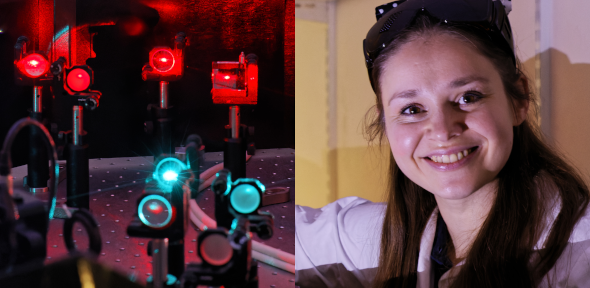
We handed the keys of @ChemCambridge to PhD student Sandile Mtetwa to celebrate the UN International Day for Women and Girls in Science. Mtetwa researches metallicity and sustainable fuels, and is a co-chair of the organisation Africans in STEM.
Two Cambridge Researchers are Honourees for Blavatnik Award
We are delighted that not one, but two of the Chemistry Department’s scientists are finalists for the Blavatnik Award for Young Scientists in the United Kingdom.
PhD student Katherine Gibson’s chemistry journey reflects her desire to learn from a wide range of influences: from other students, through working in industry, as a researcher, and most recently at a prestigious international summer school.
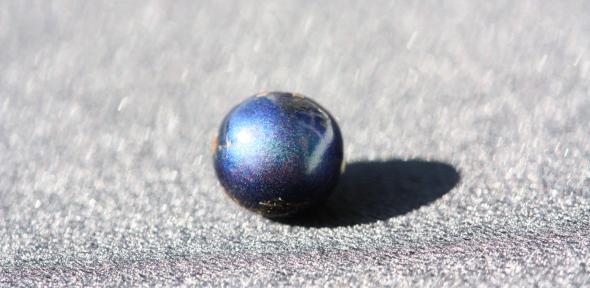
The 'strange and beautiful' Pollia condensata berry may contain the secret to handedness. Image courtesy Bio-inspired photonics.
Plant cell walls are made of cellulose fibres laid down on top of each other like plywood. In many cells, each layer is laid down with a twist from the one before - but why?
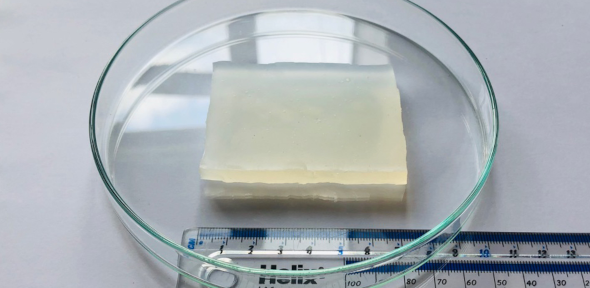
Researchers from the Yusuf Hamied Department of Chemistry have developed a jelly-like material that can withstand the equivalent of an elephant standing on it, and completely recover to its original shape, even though it’s 80% water.
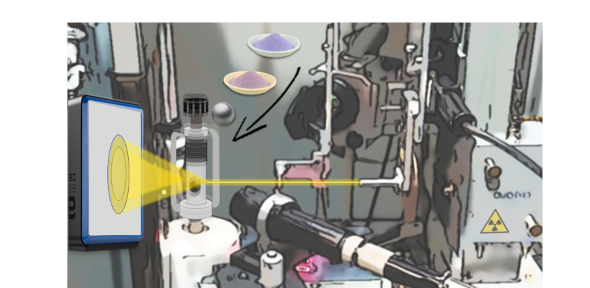
Miniature grinding mill closes in on the details of ‘green’ chemical reactions
Image courtesy Dr Giulio Lampronti
Scientists have developed a new approach for observing mechanochemical reactions, which could be used when making new compounds and materials potentially suitable for many industries.
New model could lead to better understanding of disease
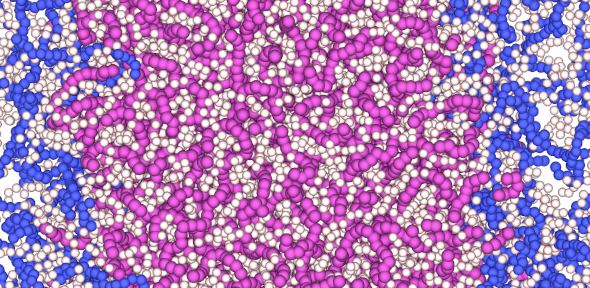
A mixture of proteins (in magenta and blue) forming a multi-layered compartment. Credit Pin Yu Chew & Aleks Reinhardt
Researchers here have created a model which can describe and predict how biomolecules self-organise into compartments inside living cells, leading the way towards a better understanding of the causes of some neurodegenerative diseases and cancers.
Sustainable, biodegradable glitter - from your fruit bowl
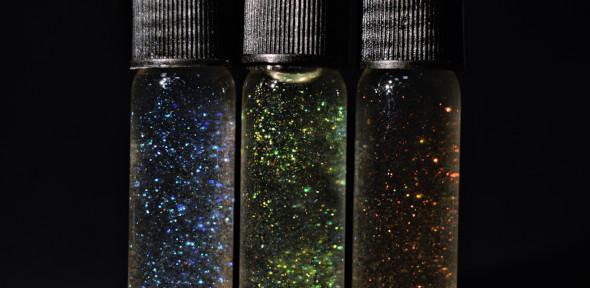
Cellulose nanocrystal glitter dispersed in different solvents, courtesy Bio-inspired Photonics group.
Researchers here have developed a sustainable, plastic-free glitter for use in the cosmetics industry – and it’s made from the cellulose found in plants, fruits, vegetables and wood pulp.
Scientists identify the cause of Alzheimer’s progression in the brain
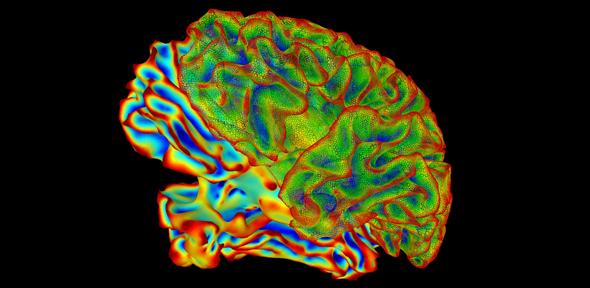
Suma Lateral Whole Brain Image, credit National Institute of Mental Health, NIH
For the first time, researchers have used human data to quantify the speed of different processes that lead to Alzheimer’s disease and found that it develops in a very different way than previously thought.