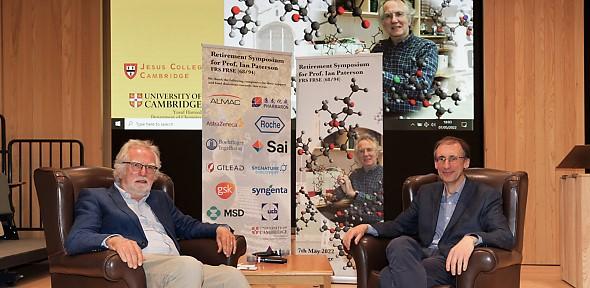
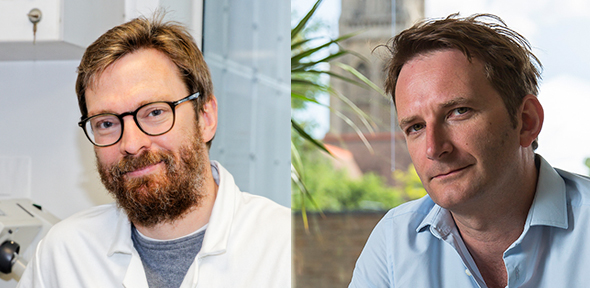
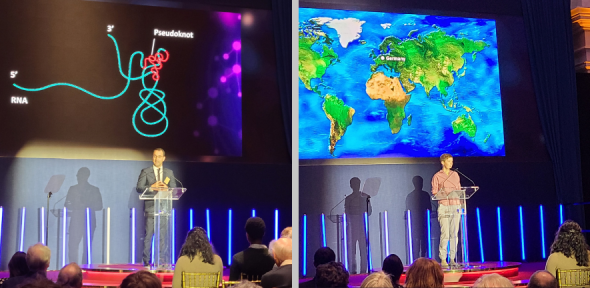
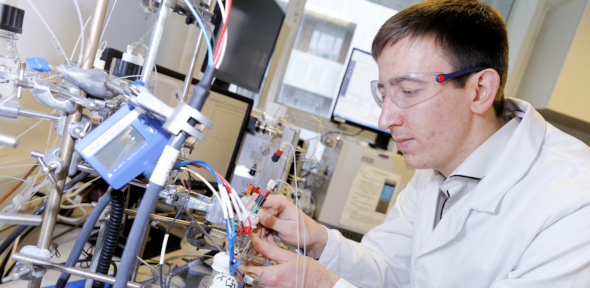
Ian Paterson (left) with Professor Jonathan Goodman, who organised the Symposium, courtesy Nathan Pitt, University of Cambridge
A symposium to celebrate the work of Professor Ian Paterson and his recent retirement was hosted on 7 May in Jesus College, where he is an Emeritus Fellow.
Cambridge’s global reputation in Chemistry recognised in REF 2021
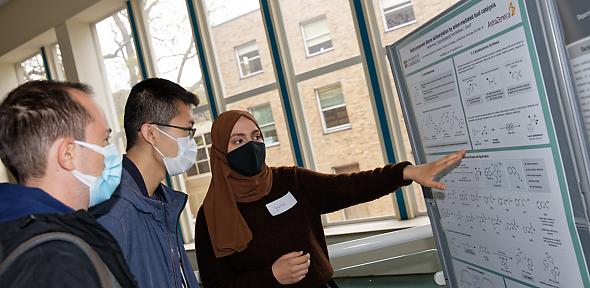
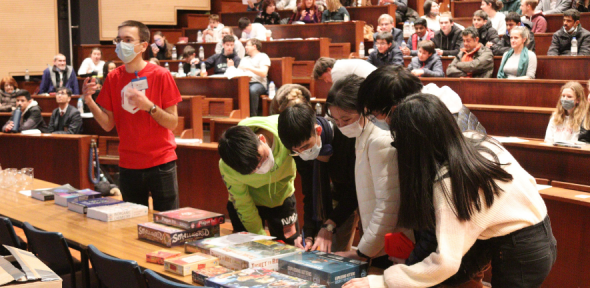
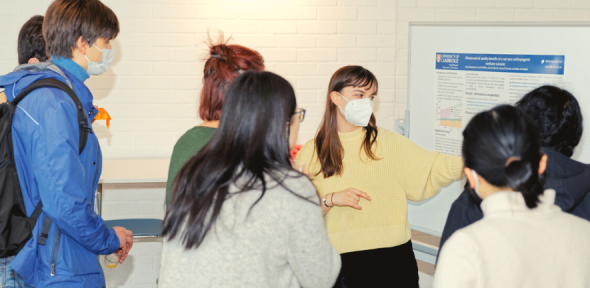
Recent postdoc poster session for undergraduates, courtesy Department of Chemistry Photography
The results from the latest Research Excellence Framework (REF) assessment highlight the impressive amount of world-leading research undertaken in the Yusuf Hamied Department of Chemistry and its wider impact on society.
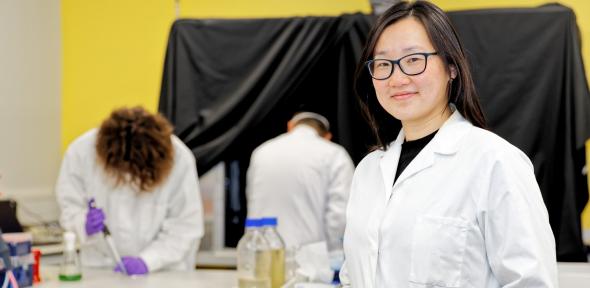
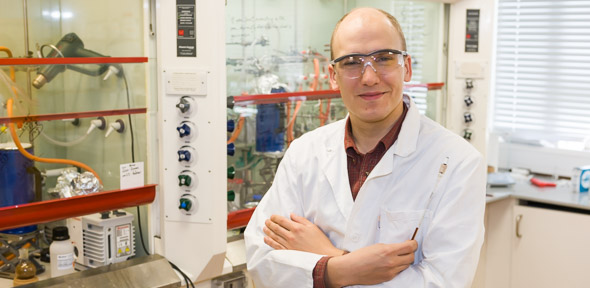
Dr Jenny Zhang has been shortlisted for the 2022 L’Oréal-UNESCO For Women in Science UK & Ireland Rising Talent Award, and the five Awardees will be announced on the 24th May 2022.
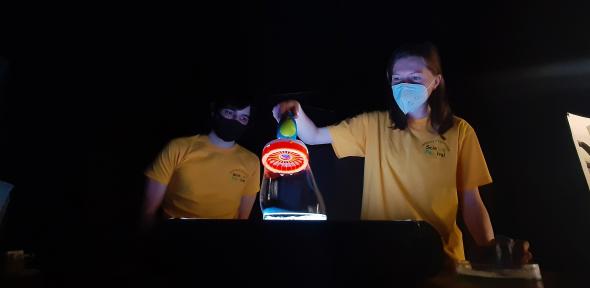
On Saturday 9th April 2022, the department opened its doors to the public once again after two years for an open day filled with bubbles, balloons, and beetles.
Sonja Osbild Curates Our Twitter for the Chemistry Open Day
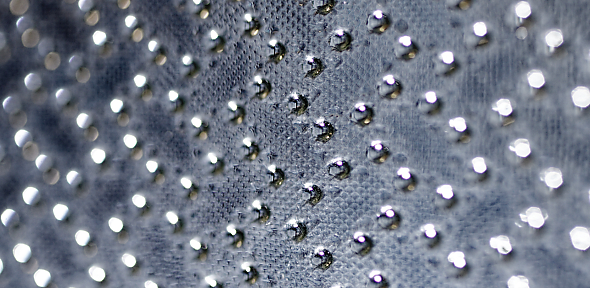
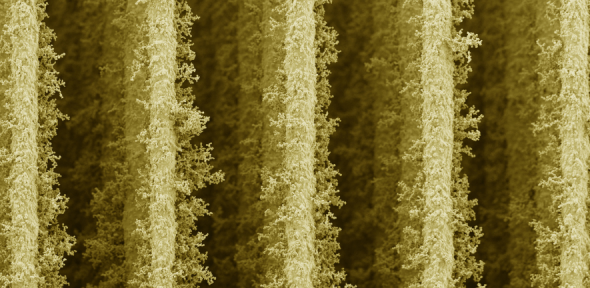
We handed the keys of @ChemCambridge to PhD student Sonja Osbild to celebrate both the Chemistry Open Day and the Cambridge Festival. Osbild researches structural colours in cellulose materials in the Bio-Inspired photonics lab.
The Third Chemistry Race returned in-person this February when we had the pleasure to welcome over 50 teams of bright sixth-form students to Cambridge.
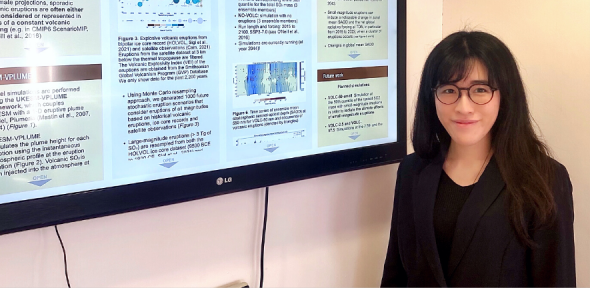
PhD student May M.M. Chim wins outstanding poster presentation
The Outstanding Student Presentation Award (OSPA) was awarded to PhD student May M.M. Chim for her poster titled “Model simulations of the climate impacts of volcanic eruptions in a future warming scenario.”