Read more

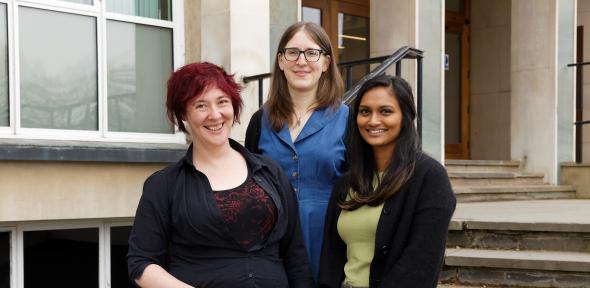
Black Women in Science Network marks Black History Month

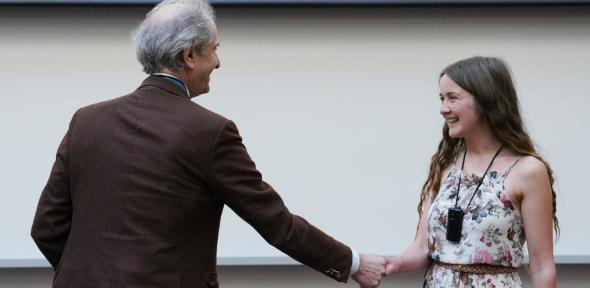
Tomi Akingbade, Black women in science

PhD student Oluwatomi Akingbade founded the Black Women in Science Network when she was an undergraduate at the University of Nottingham in 2018.


Read more

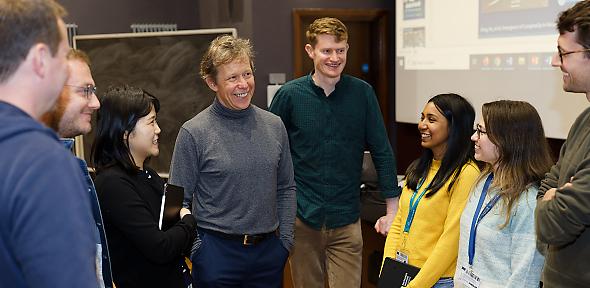
Coffee and chemistry: global women’s breakfast

Global Womens Breakfast Feb 2023 taken by Michael Webb ©University of Cambridge

Postdoctoral researchers hosted poster presentations alongside coffee and pastries to celebrate the IUPAC Global Women’s Breakfast on 14 February.


Read more

Conversations on Chemistry: watch Dr Peter Wothers alumni lecture

Dr Peter Wothers presentation 11th Feb 2023 taken by Michael Webb ©University of Cambridge

Dr Peter Wothers gave a fascinating talk on pioneering science writer Jane Marcet at our annual alumni lecture on 11 February,


Read more

New gift for Alzheimer’s disease research

Chemistry of Health opening ceremony, Nathan Pitt, University of Cambridge.

Mr R. Derek Finlay (Emmanuel 1952) has given another £2 million to promote further innovation in the Department’s Centre for Misfolding Diseases (CMD), located in our Chemistry of Health building.


Read more

The women in neuroscience network and its student founder

Elizabeth ‘Lizzie’ English wanted to connect with other women in neuroscience but couldn’t find quite the right organisation. So she started the Women in Neuroscience Network in the UK.


Read more

Grant awarded to research high performance and long-life fast charging batteries for electric vehicles

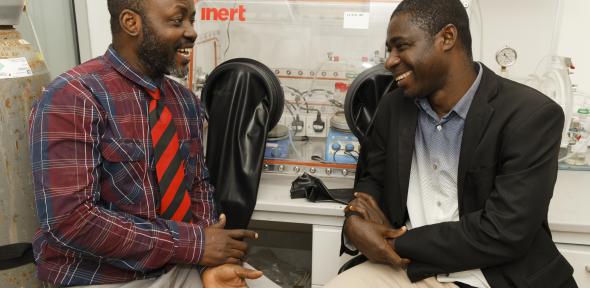
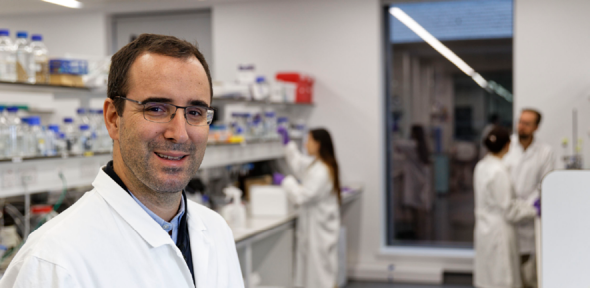
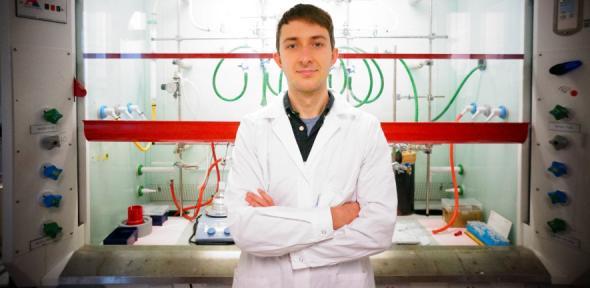
Dr Israel Temprano in his lab, Gabriella Bocchetti©University of Cambridge

“We will be working to advance the performance of fast charging, long life batteries for automotive,” explains Dr Israel Temprano, who has received a grant as part of a collaboration to research ultra-fast charging batteries.


Read more

European Research Council consolidator grant for organic chemistry

Robert Phipps during graduate open day 2017, Nathan Pitt, ©University of Cambridge

Professor Robert Phipps has been awarded a European Research Council consolidator grant for research into enantioselective radical chemistry.


Read more

Chemistry Spin-out creates better sequencing method

Image of DNA courtesy Epigenetix

Researchers at Balasubramanian Group spin-out Cambridge Epigenetix have found a new way to sequence genetic and epigenetic information in the same work flow, which could help detect diseases like cancer.


Read more

Biodesign: DNA-inspired architecture to treat cancer

Professor Hanadi Sleiman leads the 2023 Cambridge Energy Transition Lecture, Nathan Pitt, University of Cambridge.

Professor Hanadi Sleiman spoke on her work on DNA nanostructures and how they can be applied to drug design and delivery at the 2023 Cambridge Energy Transition Lecture here in January.


Read more

Early career researcher recognised for her antibody research

Courtesy @Chemistry

Bernardes Group researcher Dr Yanira Méndez Gómez has won the Otto Bayer Early Excellence in Science Award.


Read more

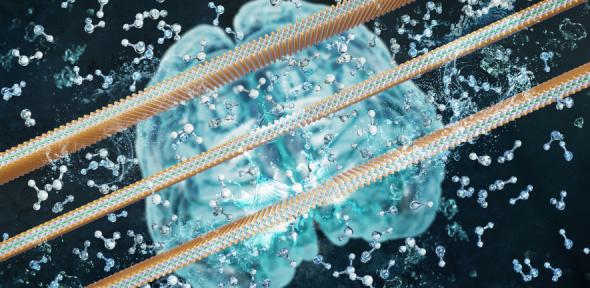
New ice is like a snapshot of liquid water

Part of the setup for creating medium density amorphous ice, Christoph Salzmann

A collaboration between scientists at Cambridge and UCL has led to the discovery of a new form of ice that more closely resembles liquid water than any other and may hold the key to understanding this most famous of liquids.


Read more

Cambridge Oncology: the start up rethinking cancer therapy

Melinda Duer and James Harrison at Robinson College taken by Nathan Pitt, ©University of Cambridge

Cambridge Oncology, a new company co-founded by Professor Melinda Duer and James Harrison, CEO of Cycle Pharmaceuticals, is pioneering a new drug that combats cancer tumours by targeting their environment.


Read more

Learning about a world powered by sunlight

The Reisner Lab Outreach Team teach chemistry in an entertaining way, courtesy @ChemistryPhotograph

A group of students recently attended a lecture peppered with fun-filled experiments to illustrate the serious issue of how to combat climate change in an entertaining and informative way.


Read more

Pepper plant may provide nasal treatment for COVID-19

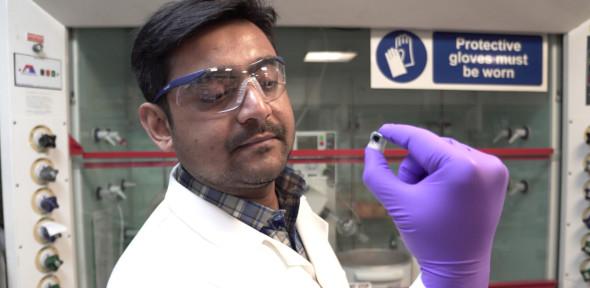
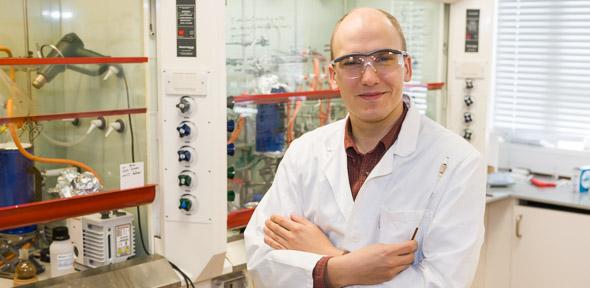
First author Dr Cong Tang, courtesy IMM

Researchers in the Bernardes group have discovered that a molecule from the long pepper plant could actively combat different variants of COVID-19.


Read more

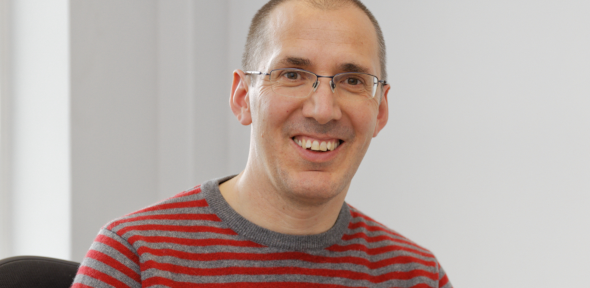
New DNA sequencing method ‘lifts veil’ from genome black box

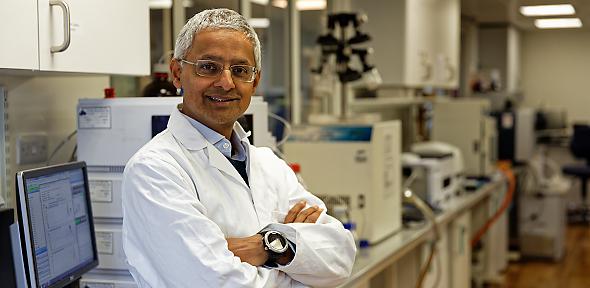
Professor Sir Shankar Balasubramanian, courtesy @Chemistry

Many life-saving drugs directly interact with DNA to treat diseases such as cancer, but scientists have struggled to detect how and why they work – until now.