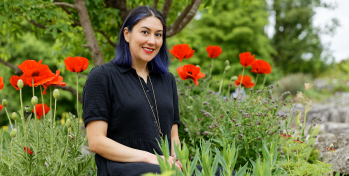
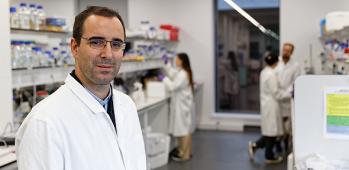
The Department warmly congratulates Professor Rosana Collepardo-Guevara on her election as a 2026 Fellow of the American Physical Society (APS), a prestigious distinction conferred by the APS Division of Biological Physics.
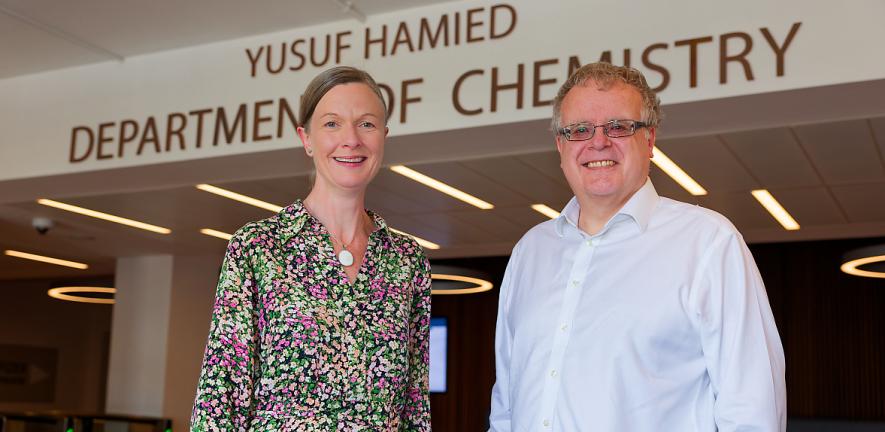
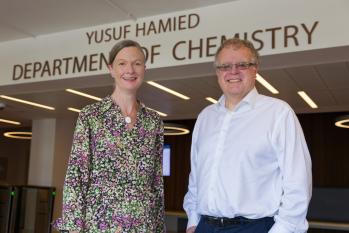
This week, the Yusuf Hamied Department of Chemistry warmly welcomes Professors Deborah Longbottom and Stephen Jenkins as our new Co-Heads of Department.
2026 Wolf Prize in Chemistry awarded for pioneering DNA sequencing
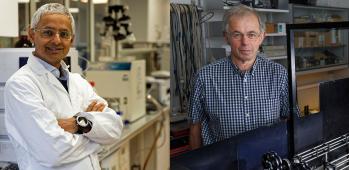
The Yusuf Hamied Department of Chemistry is delighted to announce that Professors Sir Shankar Balasubramanian and Sir David Klenerman, together with Dr Pascal Mayer (University of Strasbourg), have been awarded the 2026 Wolf Prize in Chemistry for their contributions to the development of impactful, low-cost next-generation DNA sequencing methods.
Researchers develop new molecules to target cold tumours
Researchers in the Department of Chemistry at the University of Cambridge and the University of Basel have developed small molecules that could make cancer immunotherapies more effective against tumours that are typically difficult to treat.
Rebuilding amines: Cambridge chemists develop a new way to remodel molecular structures
Chemists at the University of Cambridge have developed a new way to remodel amines – important chemical structures found in many medicines and biologically active molecules – by changing the connections between their atoms.