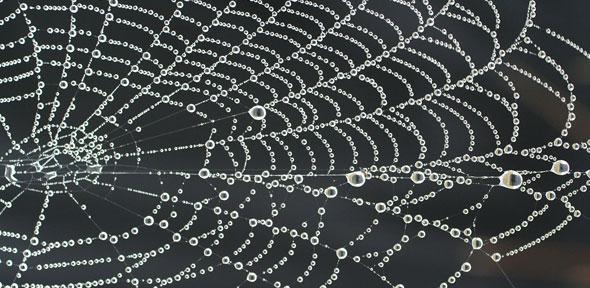
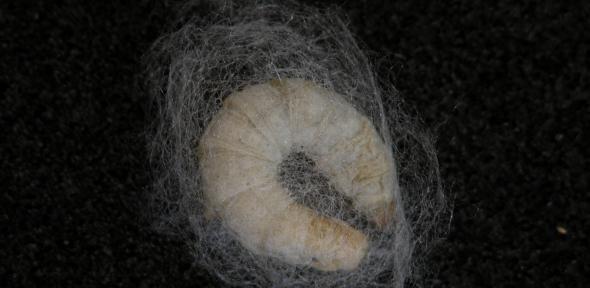
Chemists from the department's Melville Laboratory for Polymer Synthesis and architects from the Department of Architecture have developed an improved method of making synthetic spider silk.
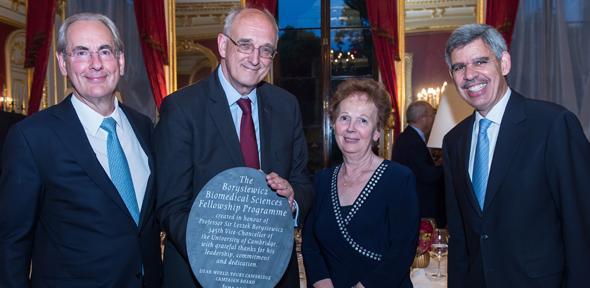
The Blavatnik Postdoctoral Fellowship Programme is inviting applications from Israelis seeking to undertake their first postdoctoral funding in life sciences, physical sciences and engineering at the University of Cambridge.
EPSRC funds corrosion in demanding environments research
A new multimillion-pound collaborative research project could help to dramatically reduce the impact that surface degradation processes such as corrosion and wear have on industry worldwide.
Professor Chris Dobson celebrates the topping out of the Chemistry of Health building with the traditional bottle of beer. Dennis Cotton, Kier Construction enjoys the moment.
The Chemistry of Health building, being constructed at the back of the Department of Chemistry on Union Road, Cambridge has reached its highest point. To mark the achievement a topping out ceremony was held on the rooftop.
Brain showing hallmarks of Alzheimer’s disease (plaques in blue) Credit: NIH Image Gallery
Researchers in the Vendruscolo Group have designed antibodies that target the protein deposits in the brain associated with Alzheimer’s disease, and stop their production.
The Department of Chemistry will shortly be deciding which applications to support for Royal Society University Research Fellowships (URF), to start in October 2018.
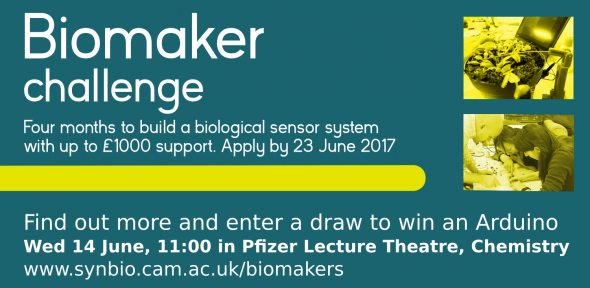
Applications are due on 23 June for the Cambridge Biomaker challenge, a four-month programme challenging interdisciplinary teams to build low-cost sensors and instruments for biology.