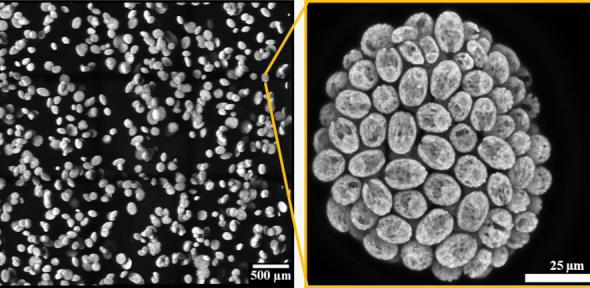
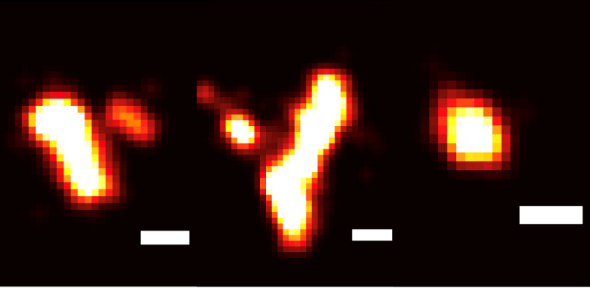
Confocal imaging of chlorophyll autofluorescence emitted from microalgae aggregates and close-up of a single aggregate, courtesy the authors.
Trees in a forest use photosynthesis to convert sunlight and carbon dioxide to oxygen. But some trees don’t grow as well as others because they are overshadowed. Imagine the same process on a microscopic scale, with exactly the same problem.
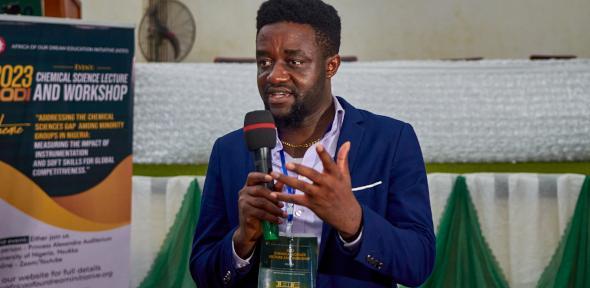
David Izuogu opens AODI's first ever chemical science conference at the University of Nigeria last June.
Applying to study at Cambridge can be an intimidating process, even if you're familiar with the UK education system. Now imagine being a student from Africa who dreams of getting a top-quality education but has no idea where to start.
Zhang appointed Assistant Professor in Materials Chemistry
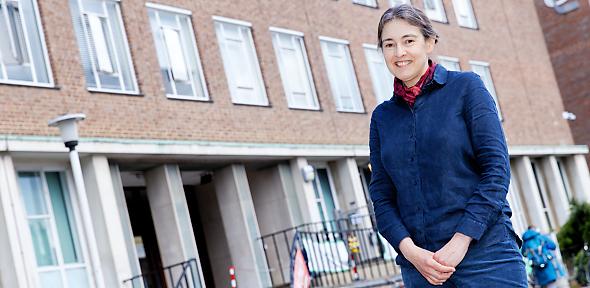
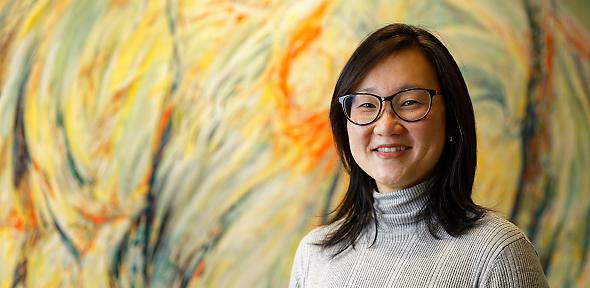
Assistant Professor Jenny Zhang, courtesy Nathan Pitt
Dr Jenny Zhang has been appointed as Assistant Professor in Materials Chemistry, with effect from 1 July 2024. The post is jointly funded by Newnham College.
The energy density of supercapacitors – battery-like devices that can charge in seconds or a few minutes – can be improved by increasing the ‘messiness’ of their internal structure.
Inside the Lab: Undergrads Share Their Summer Research Stories
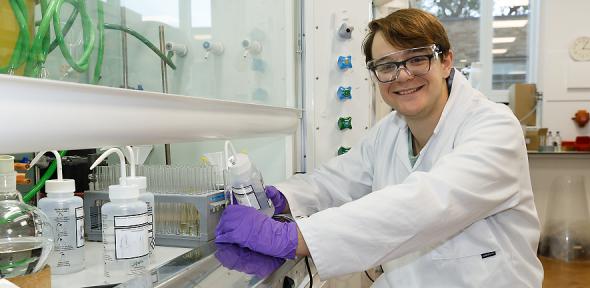
Last year our Chemistry@Cambridge Opportunity Fund and alumni gifts supported four undergrads to experience what it’s like to complete a project in a research group. Two of them report on their experience.
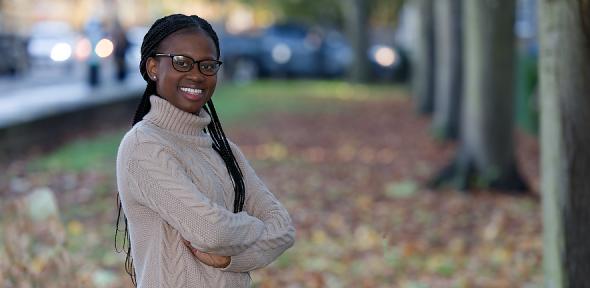
First year PhD student IniOluwa Afolabi is finding ways to manage the impact of climate change supported by a Gates Cambridge Scholarship which is awarded to outstanding students from outside the UK.
Klavs Jermakovs and Hussein Murtada are our first two Una Finlay scholars. They are studying Parkinson's disease, how it behaves, and potential new drug candidates.
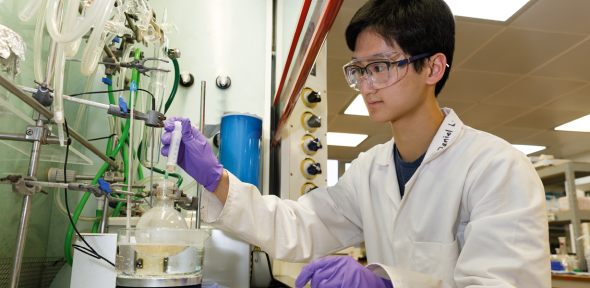
Undergrad Daniel Leong completed a summer project in the Grey Lab and won a prize for his research poster. Daniel’s project was funded through the Faraday Undergraduate Summer Experience (FUSE), which funds undergrad placements in battery research.
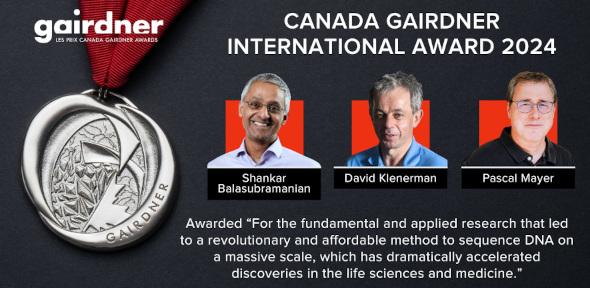
Award recognises global impact of next generation sequencing
Image courtesy the Gairdner Foundation
Professors Sir David Klenerman and Sir Shankar Balasubramanian have been named as two of the five recipients of the 2024 Canada Gairdner International Award.
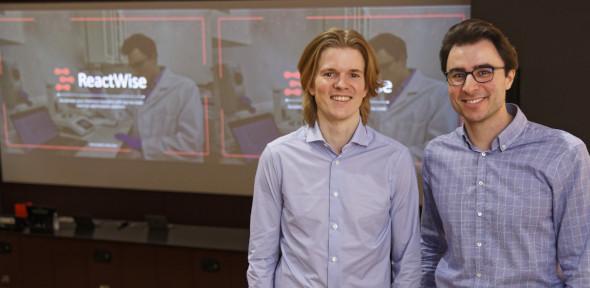
SynTech CDT students launch start-up to accelerate chemical synthesis
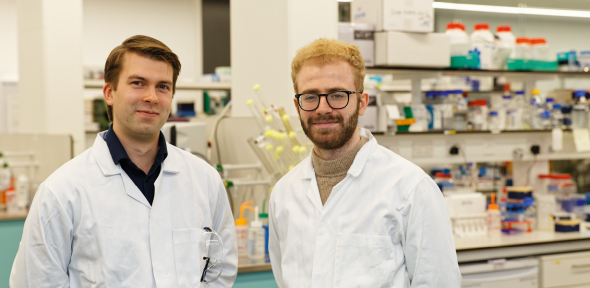
ReactWise founders Daniel Wigh (left) and Alexander Pomberger at the company launch, courtesy Chemistry Photography
Two PhD students from our department have launched a start-up which will democratise access to advanced optimisation strategies with a new, no-code software platform.
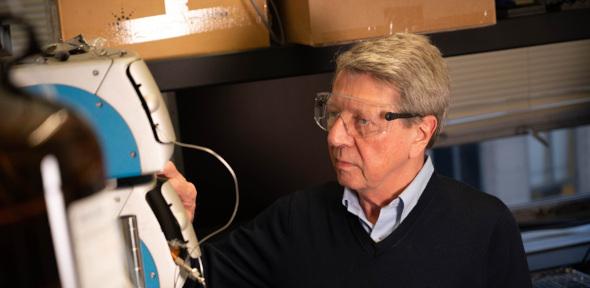
NAS Award winner in Chemical Sciences to give Melville Lectures
Professor Matyjaszewski, courtesy Carnegie Mellon and National Academy of Science
Professor Kris Matyjaszewski of Carnegie Mellon University will deliver our prestigious Melville Lectures on 14 and 16 May in the Wolfson Lecture Theatre.