
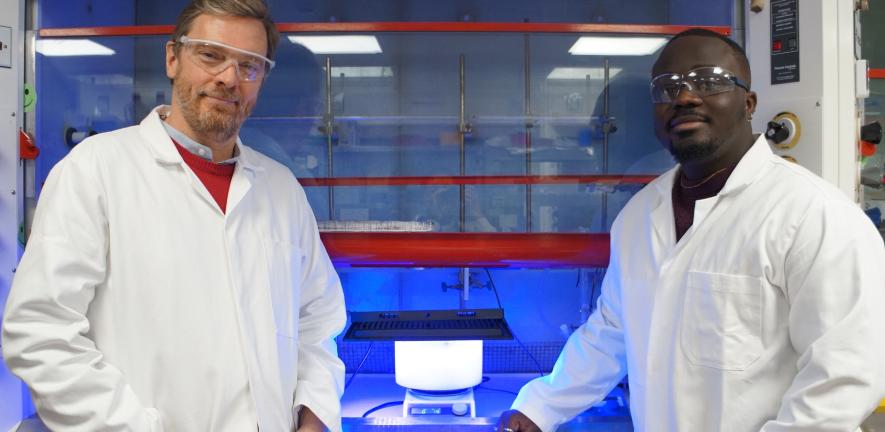
The Reisner Group have developed a solar-powered reactor that can break down plastics that are classically hard to recycle using acid recovered from used car batteries to produce clean hydrogen fuel.
The reactor recycles plastics such as drinks bottles, nylon textiles and polyurethane foams powered by sunlight and could be a cheaper and more sustainable alternative to current chemical-based recycling methods.
This photocatalyst is robust and can withstand corrosive car battery acid which is usually neutralised and discarded.
“Acids have long been used to break plastics apart, but we never had a cheap and scalable photocatalyst that could withstand them,” said lead author Kay Kwarteng, a PhD candidate in Reisner’s research group, who developed the photocatalyst. “Once we solved that problem, the advantages of this type of system became obvious.”
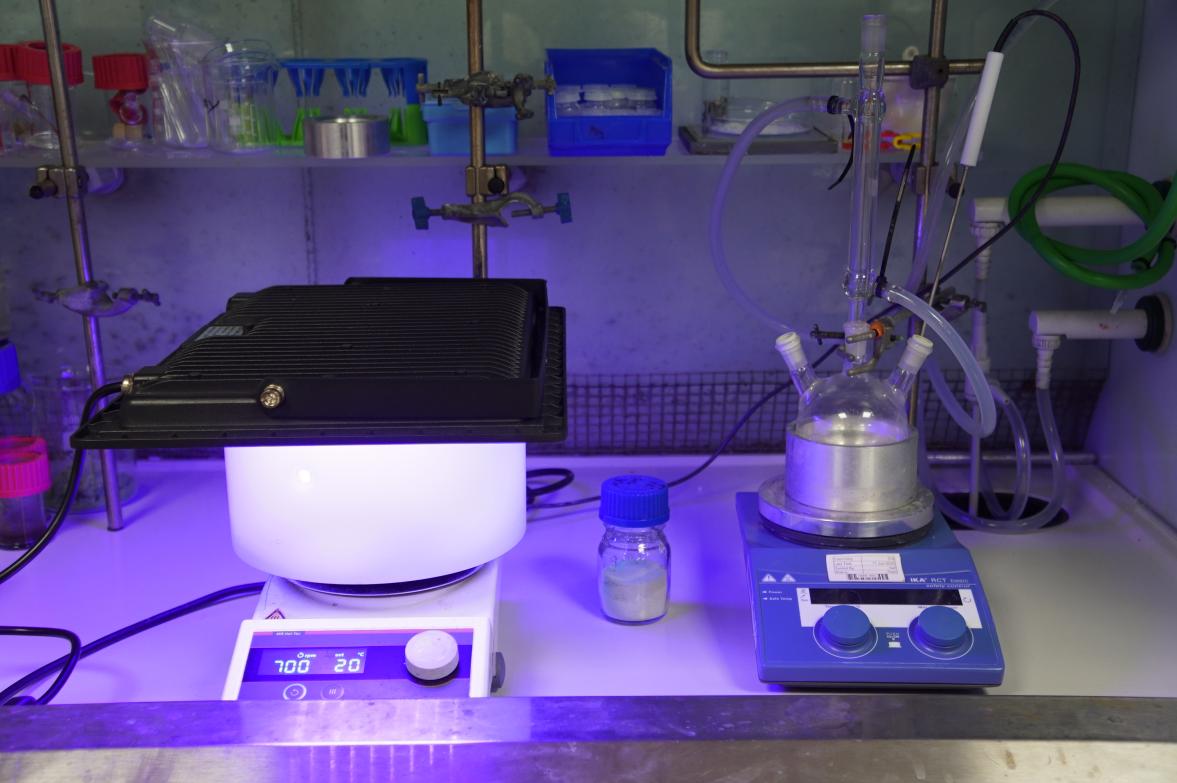
The reactor. Image courtesy of Beverly Low.
“The discovery was almost accidental,” said Professor Erwin Reisner from Cambridge’s Yusuf Hamied Department of Chemistry, who led the research. “We used to think acid was completely off limits in these solar-powered systems, because it would simply dissolve everything. But our catalyst developed didn’t – and suddenly a whole new world of reactions opened up.”
Global plastic production is more than 400 million tonnes per year, yet only 18% is recycled. The rest is burned, landfilled, or leaks into ecosystems. The researchers say that their method, known as solar‑powered acid photoreforming, could become part of the solution to the global mountain of plastic waste.
The team plans to commercialise this process with the support of Cambridge Enterprise, the University’s innovation arm, and with a UKRI Impact Acceleration Account.
Read more about this discovery here.
The text in this work is licensed under a Creative Commons Attribution-NonCommercial-ShareAlike 4.0 International License.
Images, including videos, are Copyright © University of Cambridge and licensors/contributors as identified. All rights reserved. We make our image and video content available in a number of ways that permit your use and sharing of our content under their respective terms.
