
Today, the European Research Council (ERC) has announced the winners of its latest Advanced Grant competition, with funding of €838 million awarded to 319 leading researchers across Europe. The Advanced Grants enable senior researchers to pursue ambitious, curiosity-driven projects with the potential for major scientific breakthroughs. The grants are part of the EU’s Horizon Europe programme.
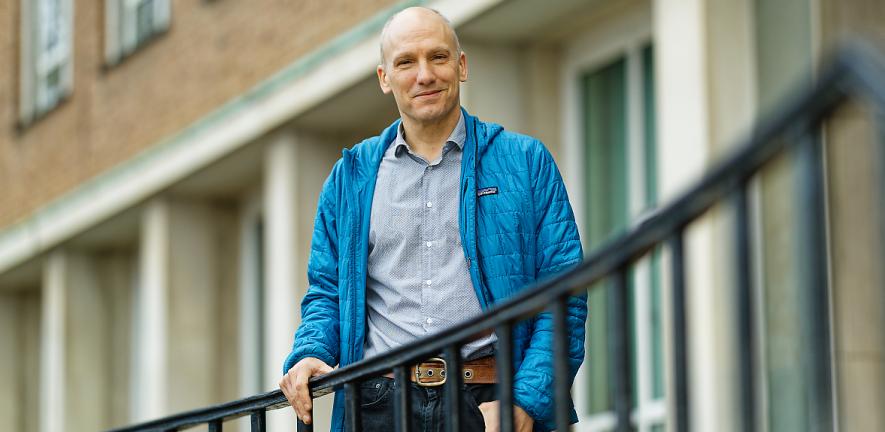
The Department congratulates Professor Jonathan Nitschke on receiving a €2.5M ERC Advanced Grant.
The project, "Large, Dynamic Capsules for Biomolecular Cargoes", aims to develop the largest enclosed metal-organic capsules ever created. These nanoscale structures will be designed to capture and hold biomolecules such as proteins and nucleic acids without the need for chemical attachment, overcoming a major limitation of existing capsule systems. The project will develop capsules that are stable and water-soluble, with highly enclosed structures that allow close contact between the capsule walls and biomolecules. Their interiors will be engineered with specific chemical features, including electrical charges and other interactions, to help them recognise and bind to target molecules.
The capsules will also be able to adapt their shape, adjusting their internal structure to improve binding. They can expand and contract to capture and release molecules, which could support chemical purification processes. In the long term, these systems may also allow enzymes to function in conditions where they would normally be inactive or insoluble.
On receiving this grant, Professor Nitschke said:
“I’m over the moon that we’ll be able to pursue this project under ERC auspices. Its award is a testament to my team’s hard work and creativity.”
The President of the European Research Council, Prof. Maria Leptin, said:
“The new Advanced Grant projects demonstrate the creativity, ambition, and intellectual boldness that frontier research requires. The ERC’s role is to support researchers who are asking difficult scientific questions and want to venture into unexplored territory in pursuit of new knowledge. Congratulations to all our new grantees. They are of 33 different nationalities – a testament to Europe’s strength as a destination for outstanding scientific talent, regardless of origin. We need to step up investment for Europe to lead in science and innovation.”
The text in this work is licensed under a Creative Commons Attribution-NonCommercial-ShareAlike 4.0 International License.
Images, including videos, are Copyright © University of Cambridge and licensors/contributors as identified. All rights reserved. We make our image and video content available in a number of ways that permit your use and sharing of our content under their respective terms.
