
Professor of Atmospheric Science
Observational studies of atmospheric structure and photochemistry: from climate change to air pollution and human health
In our group we use a wide range of measurement and modelling techniques to study the chemical composition and physical structure of the earth’s atmosphere.
The atmosphere controls much of the complex environment in which we live. Ozone in the stratosphere protects us from harmful shortwave solar radiation, while changes in CO2 and other greenhouse gases are influencing the world’s changing climate. In the troposphere, chemical processes act to remove many unwanted species, while at the same time contributing to poor air quality, impacting the health of many, and leading to millions of premature deaths, particularly in the developing world.
Low cost sensors for monitoring urban pollution
We develop low cost air quality sensors which allow us to probe urban pollution in unprecedented detail. You can find out more by watching our short video above.
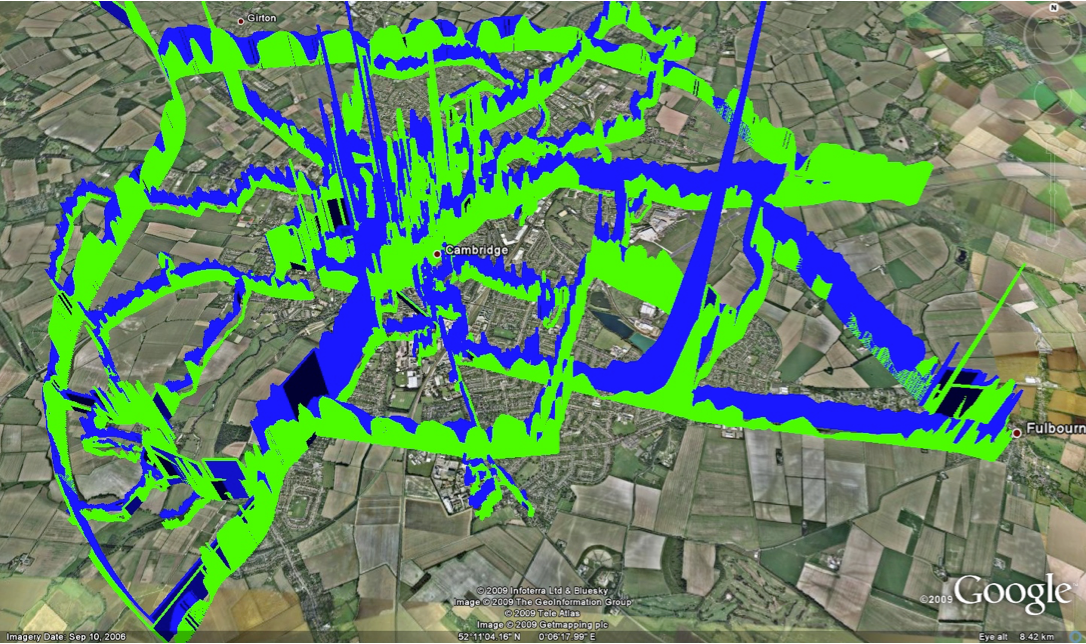 NO and NO2 levels in Cambridge on one afternoon, illustrating how complex urban air pollution can be.
As part of our research we are demonstrating how these low cost air quality sensor networks can be used to address important scientific and political questions. Studies include low cost sensor network deployments at Heathrow airport, in Beijing and in Delhi.
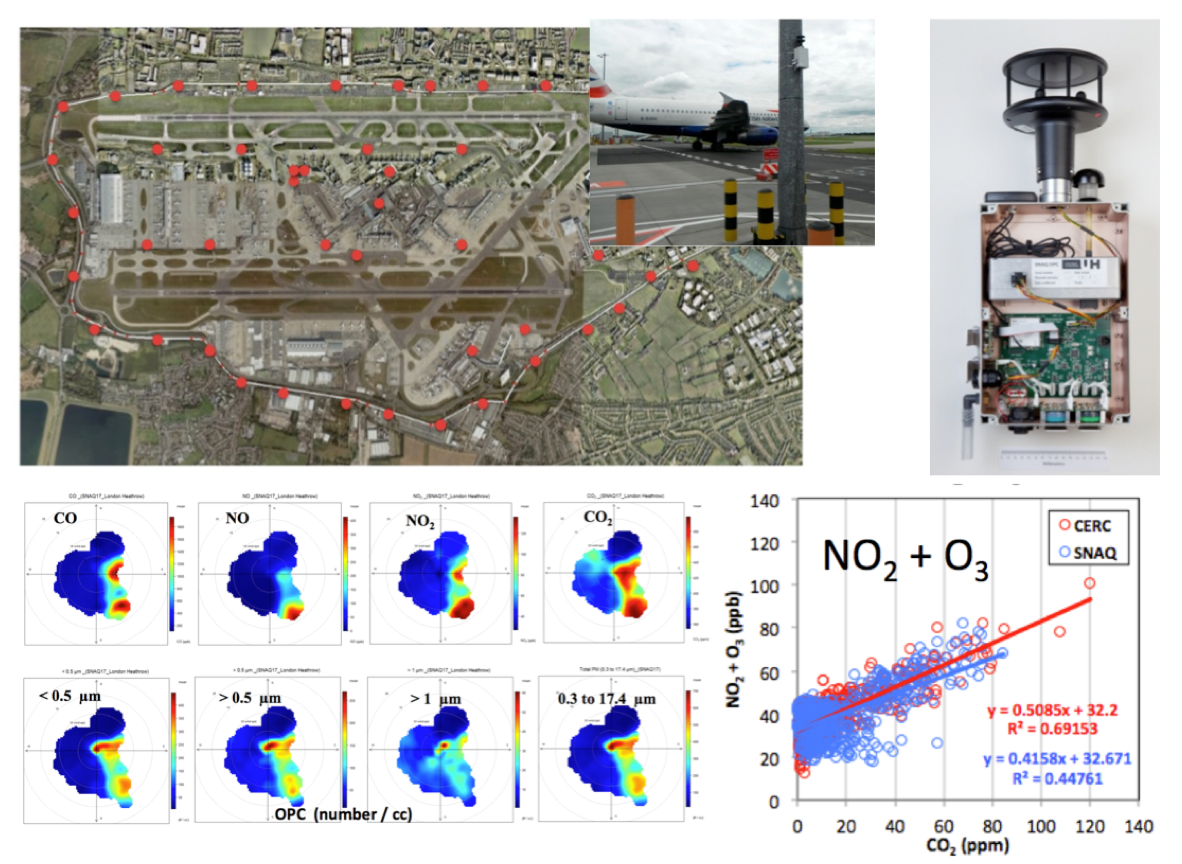 Results from a recent sensor network deployment at Heathrow Airport, used to both quantify airport emissions and provide a prediction of the likely impact of an airport expansion.
Air quality and human health
We use portable air quality sensors to test the linkages between exposure to pollution and health impacts. These units allow us to develop activity models which we can use to predict air pollution dose far more accurately than before. They are now used for studies of Chronic Obsructive Pulmonary Disease (COPD) in London, and wider health impacts (Beijing and elsewhere).
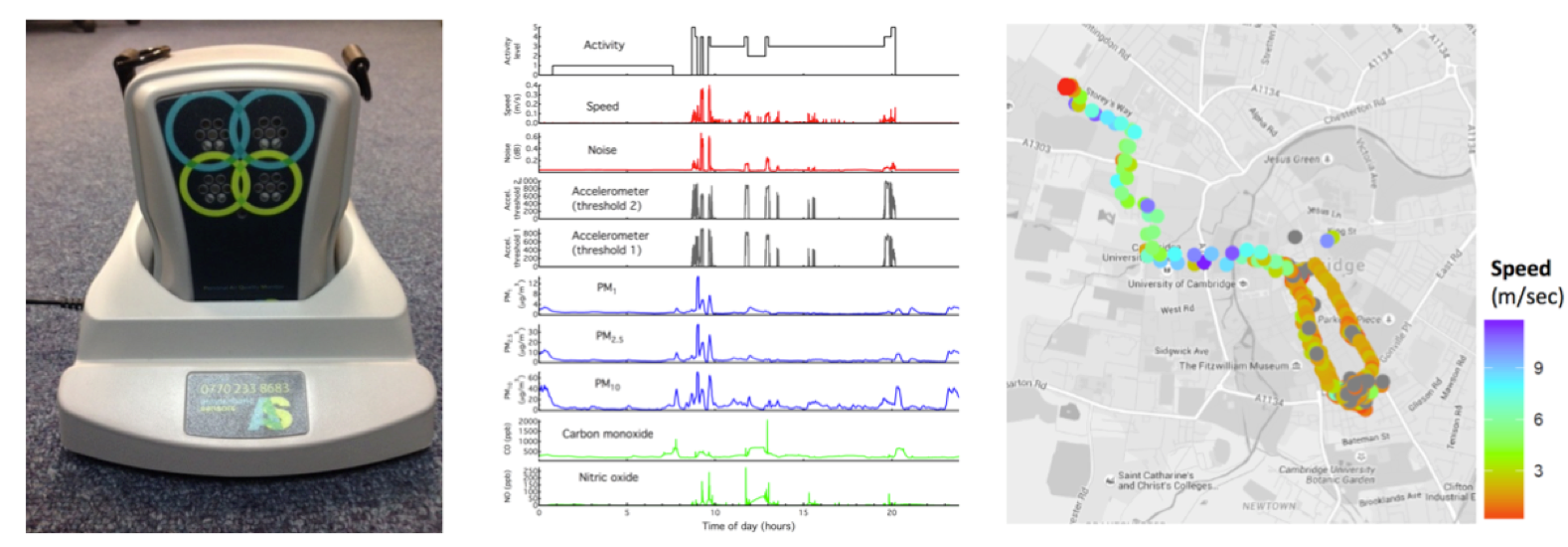 A portable air quality sensor used by the group, which includes GPS and accelerometers, with illustration of measurements.
Other projects
Other projects within the group range from using cavity ringdown spectroscopy and its variants for making ultrasensitive (sub-ppt level) airborne and ground based measurements of radical species (using the FAAM aircraft), balloon borne measurements of GHGs, volcanic emissions and many more.
Selected Presentations
Further information
If you are interested in joining us as a graduate student or postdoctoral researcher, please contact me at rlj1001@cam.ac.uk.
Publications
- ‹ previous
- Page 21
