

Our major research programme concerns the folding, stability and activity of proteins. We apply a broad multi-disciplinary approach that combines methods and ideas of molecular biology and physical-organic chemistry. We use techniques including protein engineering, DNA cloning, sequencing and mutagenesis, cell culture, gene and peptide synthesis, spectroscopy, rapid reaction techniques, multi-dimensional NMR (we have a 500, 600, 700 and an 800 MHz spectrometers) and x-ray protein crystallography.

Current major projects include: protein folding, misfolding and disease; drug discovery; and structure-activity relationships of proteins involved in cancer and disease.

Although now emeritus, I am still fully active in research with long term funding, including an MRC Programme Grant.
Publications

Protein folding transition states: elicitation of Hammond effects by 2,2,2-trifluoroethanol.
CP Yiu, MG Mateu, AR Fersht
Chembiochem
(2000)
1
Stabilization of GroEL minichaperones by core and surface mutations
Q Wang, AM Buckle, AR Fersht
Journal of Molecular Biology
(2000)
298
Fast-folding proteins.
AR Fersht
ABSTR PAP AM CHEM S
(2000)
219
Towards a complete description of the structural and dynamic properties of the denatured state of barnase and the role of residual structure in folding 1 1Edited by B. Honig
KB Wong, J Clarke, CJ Bond, JL Neira, SM Freund, AR Fersht, V Daggett
J Mol Biol
(2000)
296
Characterization of in vitro oxidized barstar
C Frisch, G Schreiber, AR Fersht
FEBS letters
(2000)
370
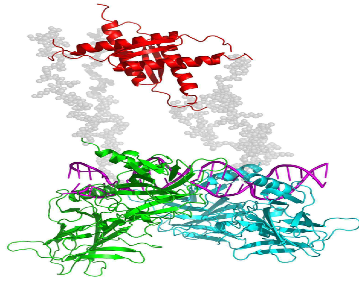
Quantitative analysis of residual folding and DNA binding in mutant p53 core domain: definition of mutant states for rescue in cancer therapy
AN Bullock, J Henckel, AR Fersht
Oncogene
(2000)
19
Untitled
JM Lehn, AR Fersht
EUR J INORG CHEM
(2000)
Increased rates of tRNA charging through modification of the enzyme-aminoacyl-adenylate complex of phenylalanyl-tRNA synthetase.
M Ibba, CM Johnson, H Hennecke, AR Fersht
FEBS Letters
(2000)
358
Transition-state structure as a unifying basis in protein-folding mechanisms: contact order, chain topology, stability, and the extended nucleus mechanism.
AR Fersht
Proceedings of the National Academy of Sciences of the United States of America
(2000)
97
Directed evolution of new catalytic activity using the α/β-barrel scaffold (Retracted article. See vol 417, pg 468, 2002)
MM Altamirano, JM Blackburn, C Aguayo, AR Fersht
Nature
(2000)
403