
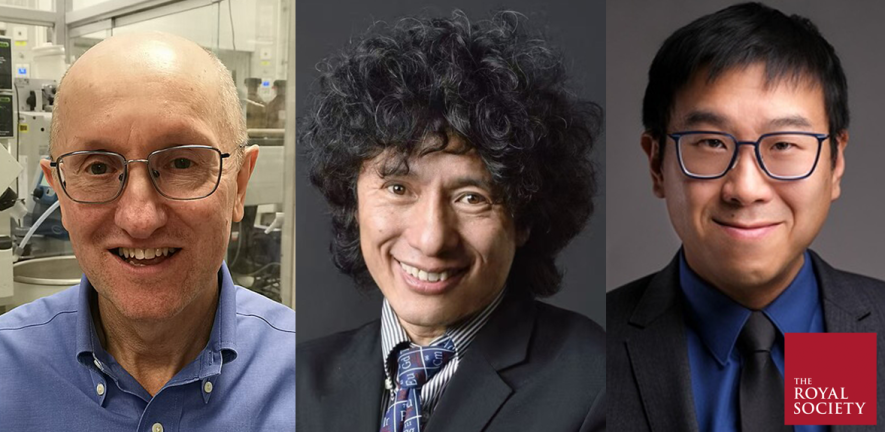
The Department congratulates its alumni, Professor Jin-Quan Yu, Dr David Rees and Professor Garnet Kin-Lic Chan, on their election to the Fellowship of the Royal Society. Founded in 1660, the Royal Society is the UK’s national academy of sciences and one of the world’s oldest scientific institutions. Election to its Fellowship recognises individuals who have made substantial contributions to the advancement of natural knowledge.
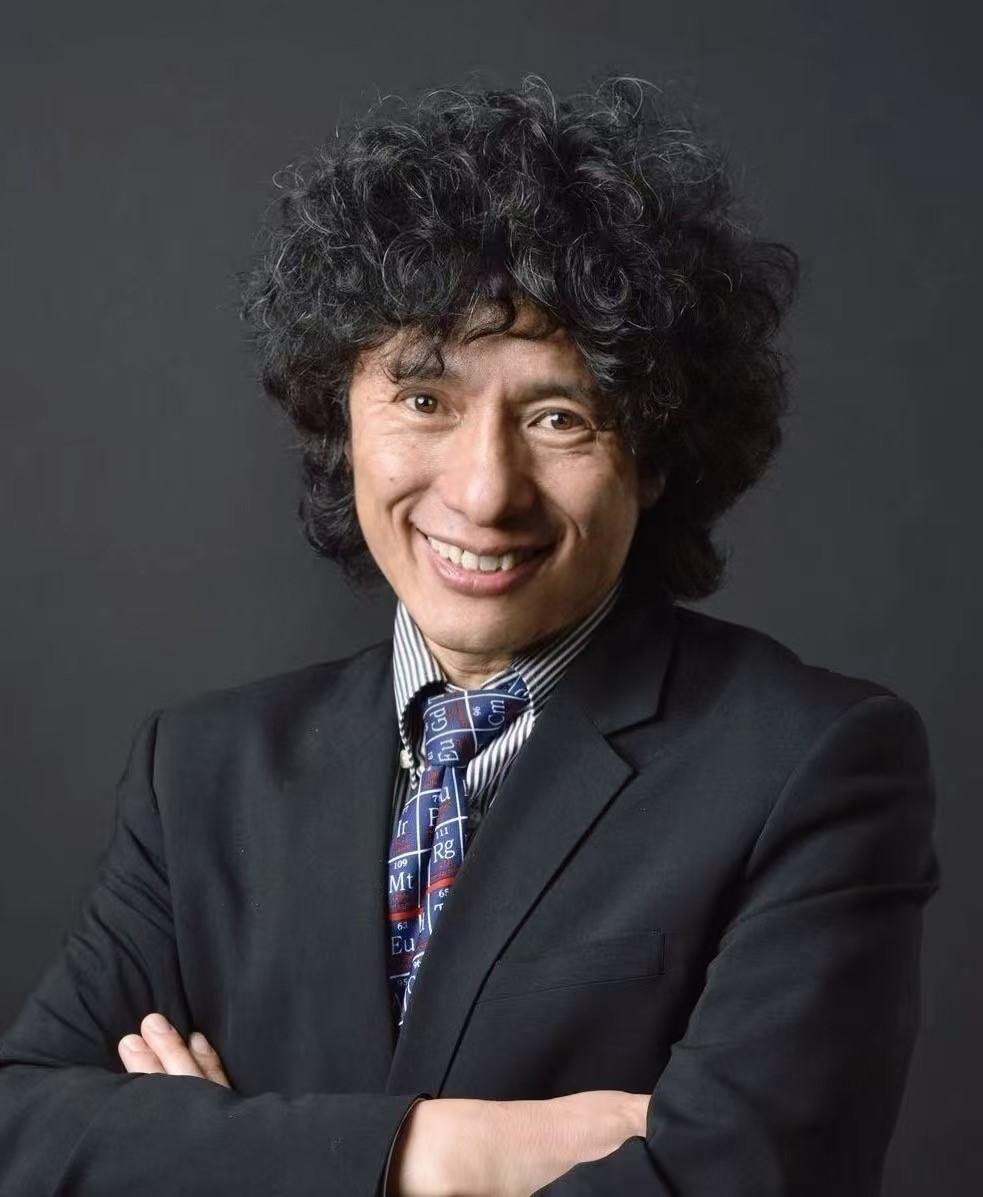
Professor Jin-Quan Yu, now based at Scripps Research in California, is internationally recognised for pioneering advances in synthetic organic chemistry, particularly in the field of carbon–hydrogen (C–H) activation. His work on chiral catalyst design has had broad applications in enantioselective synthesis, especially in pharmaceutical and chemical biology research. He is widely regarded as a global leader in catalysis and reaction development.
Reflecting on his early work, Professor Yu says:
“In 2002, I began my first independent project on asymmetric C–H activation, at a time when the field was still largely in its infancy and many of my ideas were quite bold. It has been both gratifying and humbling to see how some of those early concepts have since been realised in ways I could not have fully anticipated. The early stages of the project, funded by the Royal Society with support from the Department of Chemistry, were very significant to me and, in hindsight, set the foundation for a two-decade journey in developing site-selective and enantioselective C–H activation through new ligands and catalysts. I would also like to pay tribute to my PhD mentor, the late Dr J. B. Spencer, and to the many faculty members at Cambridge who taught and inspired me during those formative years, when I learned how to think about synthetic and physical organic chemistry. I remain deeply grateful for their generosity, encouragement and guidance.”
Dr David Rees, formerly Chief Scientific Officer at Astex Pharmaceuticals, is recognised for his major contributions to industrial drug discovery and medicinal chemistry. Throughout his career in the pharmaceutical sector, he has played a key role in advancing structure-based drug design and in the discovery and development of multiple therapeutic agents. Among his notable achievements is his involvement in the development of medicines including anti-cancer therapies and sugammadex, an important anaesthetic reversal agent now used in clinical practice worldwide. His leadership helped establish Astex as a pioneer in fragment-based drug discovery, a methodology that has had a lasting influence on pharmaceutical research and development.
Reflecting on his career, Dr Rees says:
“I joined the Lensfield Road Chemistry Department in 1979 to do a PhD on the total synthesis of alkaloid natural products using organometallic methods, and I am grateful to my supervisor, Professor Tony Pearson, for the balance of support and challenge I experienced in the Department. During my PhD I met the late Professor Chris Abell FRS, who later co-founded Astex, and I returned to Cambridge in 2003 to work on fragment-based drug discovery, illustrating how academia–industry collaboration can lead to new medicines. The FRS is a dream come true for me, but what is more important is its recognition of the great drug discovery research teams with whom I have worked for over 30 years, many involving collaborations across industry and academia.”
Garnet Kin-Lic Chan is the Bren Professor of Chemistry and Director of the Marcus Center for Theoretical Chemistry at Caltech. He previously held positions at Princeton University and Cornell University, and received his undergraduate and doctoral degrees from the University of Cambridge. He also held postdoctoral fellowships at Christ’s College, Cambridge, and the University of California, Berkeley. His research focuses on the computational simulation of complex systems in chemistry and physics, with particular emphasis on quantum many-body problems. He is a member of the US National Academy of Sciences, and his work has been recognised with numerous awards.
Looking back at his years in Cambridge, Professor Chan says:
"I started in Natural Sciences at Cambridge (Christ's) in 1993, and my first lectures in chemistry covered bonding, taught by James Keeler (the current HoD). I still remember the shiny computer graphics images of atomic orbitals, a novelty at the time! Following David Buckingham's seminal lectures in quantum mechanics, and Nick Pyper's skillful supervisions on the same, I decided on a research career in theoretical chemistry. Thus, I started my PhD in 1996 under the guidance of Nicholas Handy. Professor Handy's no-nonsense approach to problems, with a strong emphasis on judging methodological developments by their practical usefulness, left a major imprint on my own thinking and has shaped my scientific career. The election to the Royal Society reminds me of the debt I owe to all my friends and teachers during my time at Cambridge, and it is to them that I dedicate this recognition."
Read more here
The text in this work is licensed under a Creative Commons Attribution-NonCommercial-ShareAlike 4.0 International License.
Images, including videos, are Copyright © University of Cambridge and licensors/contributors as identified. All rights reserved. We make our image and video content available in a number of ways that permit your use and sharing of our content under their respective terms.
