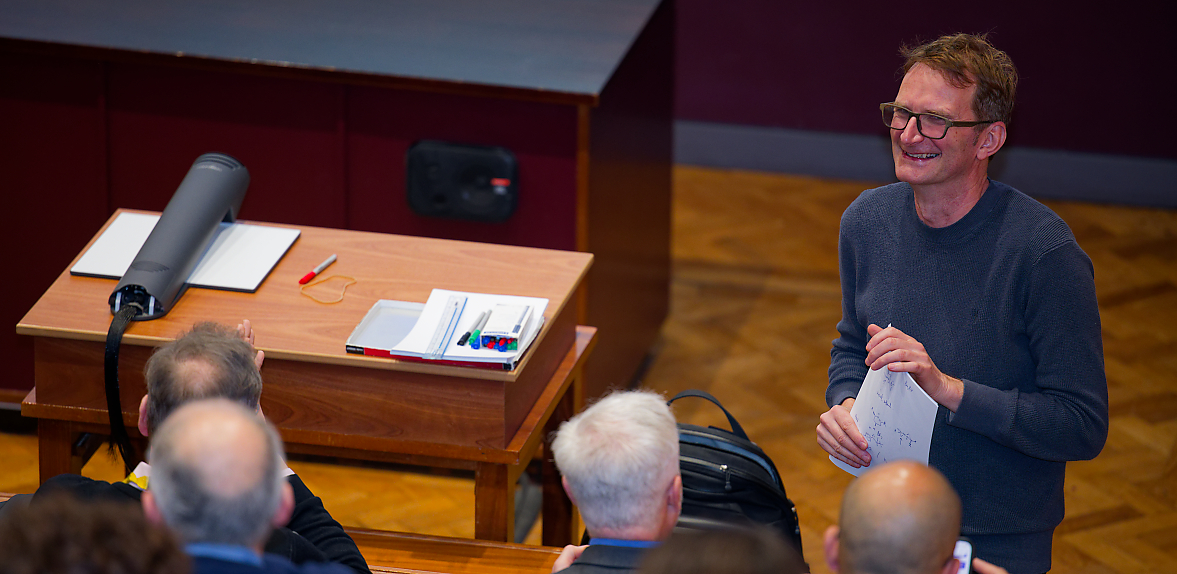

On Monday 8 December, Professor Jacobsen delivered the first of his two lectures, Uncovering Cooperative Pathways in Asymmetric Catalysis. He explained how, in the search for new asymmetric catalytic reactions, his research group often carries out in-depth investigations into how their catalysts function. He described several instances in which small, unexpected anomalies in experimental data prompted closer scrutiny and ultimately revealed surprising details about the catalytic mechanisms at work. He explained how these insights enabled the team to develop improved or entirely new catalytic systems. What linked all of the systems, he noted, was the discovery of previously unrecognised cooperative mechanisms. He ended the lecture by outlining the group’s latest efforts to identify these cooperative pathways through a combination of focused, hypothesis-driven investigations and broader, mechanism-agnostic approaches.
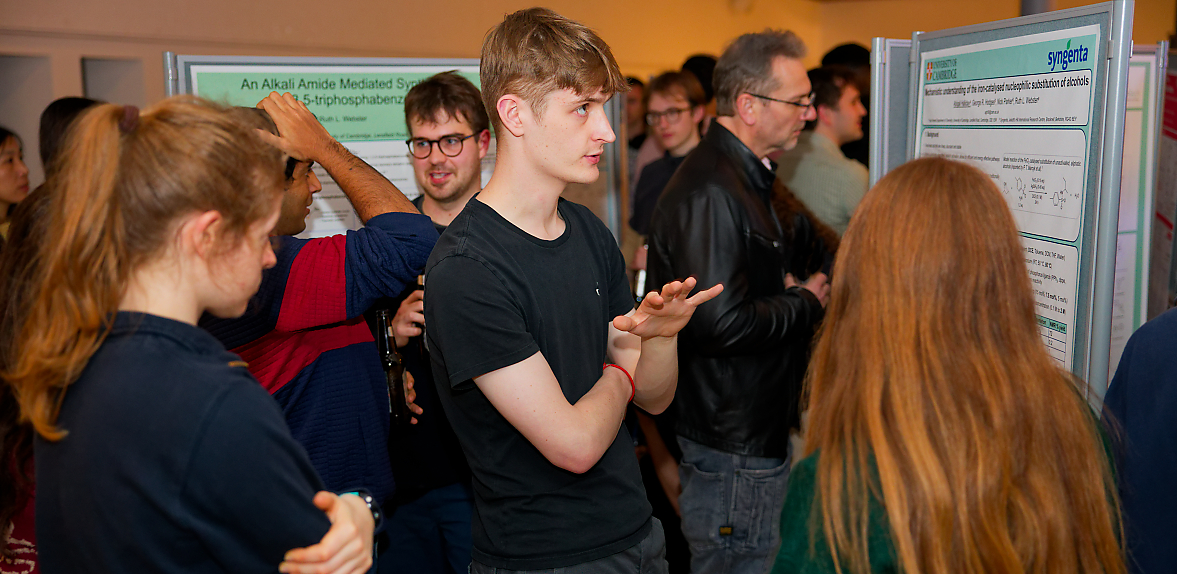
The lecture was followed by a poster session, during which students and postdocs from the department had the opportunity to showcase their work, stimulating discussions about future applications and collaborations.
On Tuesday 9 December, during the MSD symposium, Dr Izzat Raheem presented Discovery of MK-8527: A Novel Nucleoside Reverse Transcriptase Translocation Inhibitor for Long-acting HIV Pre-exposure Prophylaxis, highlighting Merck’s advances in antiviral drug development. The presentation outlined a medicinal chemistry discovery campaign focused on nucleoside-based antivirals, addressing the challenges of complex biology and demanding synthetic chemistry. This work ultimately led to viable candidates suitable for advancement into clinical trials. Dr Raheem concluded by sharing encouraging clinical data indicating the potential for an effective long-acting inhibitor for HIV pre-exposure prophylaxis.
Following this, Professor Jacobsen delivered his second lecture, Privileged Chiral Catalysts: Selectivity and Generality in Enantioselective Catalysis. He described strategies for elucidating and discovering general catalytic systems, including the development of a new class of privileged chiral catalysts: dual hydrogen-bond donors bearing aryl-pyrrolidino-tert-leucine motifs. Case studies of these catalysts highlighted the cooperative features of these simple organic molecules that likely underpin their privileged behaviour.
Professor Jacobsen’s research, integrating synthetic chemistry, physical organic chemistry, computation and catalysis, continues to transform the field of asymmetric catalysis. The Department was honoured to host him for this year’s prestigious MSD Lectureship.