

Department of Chemistry

portrait of Professor Bill Jones

Professor Bill Jones

Sidney Sussex College

Groups: Jones (W.) group website

Telephone: 01223 336468

E-mail: wj10@cam.ac.uk

.


General


Materials Chemistry Group and Pfizer Institute for Pharmaceutical Materials Science

Functional (pharmaceutical) molecular solids

The design of functional molecular materials has advanced tremendously through cocrystallisation: the assembly of multiple chemical species in the same crystal lattice. Underlying cocrystals formation are rules that guide molecular recognition and self-assembly. We are deciphering this "intermolecular language" by combining experimental work with data mining and molecular modelling. Our particular interest is constructing functional materials through weak supramolecular interactions, such as hydrogen and halogen bonds.
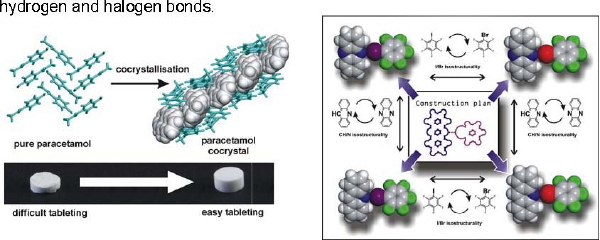
Surface dynamics of molecular solids

Properties of crystalline solids are usually measured as a bulk property, and the results interpreted in terms of crystal structure. However, such a description does not adequately describe the surface of molecular crystals, at which the distribution of forces on a molecule is non-symmetrical, resulting in high mobility and reactivity. The atomic force microscope (AFM) is a unique tool for studying such surface-related dynamics.

Mechanosynthesis: environmentally-friendly synthesis through grinding

The use of mechanical force, instead of heat, to transfer energy provides a rapid and clean way to conduct chemical reactions. We are especially interested in grinding as a means of conducting (almost!) solvent-free synthesis of materials that have catalytic or pharmaceutical significance, from the simplest and cheapest possible precursors (e.g. minerals).

Selected Publications

Crystal Growth and Design, (2009), 9, 1621;

CrystEngComm, (2009), 11, 470;

Chemistry - European Journal, (2008), 14, 8830;

Chemistry of Materials, (2008), 20, 6623;

Crystal Growth and Design, (2008), 8, 1605

Research Interests


Teaching


Current teaching includes a third year undergraduate lecture course on the Chemistry of Materials.  The course examines a range of organic, metal-organic and inorganic materials and demonstrates their varied uses. We will, in particular, identify important structural features relevant to such areas as the pharmaceutical and petrochemical industries and to naturally occurring biomaterials such as bone. The underlying chemistry and properties will be shown to be often sensitive to the way that the constituent atoms and molecules are packed together. This aspect of solid state control will be examined in some detail.

The development and design of new materials, incorporating structural characteristics of inorganic solids and functionality of organic molecules will be described.

The control of crystal morphology is important in many applications, and this will be discussed in the context of templating crystal growth, both in Nature and in the laboratory, and of crystal engineering. Numerous important materials, including many found in Nature, are in fact inorganic-organic composites, and these will also be discussed in detail.

From paracetamol to petrol to proteins to bone – the importance of the Chemistry of Materials will be explored in these lectures.

Also, as part of the Cambridge fourth year program I teach a course on Organic Solids that builds on the lecture course Chemistry of Materials given in Part II (although it is not required that students have taken this course). The first six lectures of the course, given by me, will cover aspects of crystal chemistry, structure and reactivity of organic solids. Examples of lattice controlled reactions will be given, including photochemical and thermal. Particular emphasis will be placed on how solid state properties impact on the development of drug products in the pharmaceutical industry. Experimental approaches to understanding molecular packing will be described and will lead into the second part of the course, given by my colleague, Dr Graeme Day.

Personal


Publications

Publications

1,4-Benzenedimethanol
N Shan, W Jones - Acta Crystallographica Section E Structure Reports Online (2001) 57, O1233
(DOI: 10.1107/S1600536801019973)
Diphenic acid-acridine (1/1)
Z Shaameri, N Shan, W Jones - Acta Crystallographica Section E Structure Reports Online (2001) 57, o1075
(DOI: 10.1107/S160053680101618X)
Hillock formation on copper at room temperature by cleaning in ammonia vapor
PJ Herley, AL Greer, W Jones - Applied Physics Letters (2001) 79, 2725
(DOI: 10.1063/1.1412432)
Bis[1-hydroxypyridine-2(1H)-thionato-S,O]copper(II).
AD Bond, N Feeder, SJ Teat, W Jones - Acta Crystallographica Section C Crystal Structure Communications (2001) 57, 1157
(DOI: 10.1107/S0108270101012306)
Acridinium isophthalate
Z Shaameri, N Shan, W Jones - Acta Crystallographica Section E Structure Reports Online (2001) 57, o945
(DOI: 10.1107/S1600536801013927)
Oxidation of cyclohexene over Mn(TMPyP) porphyrin-exchanged Al,Si-mesoporous molecular sieves
J Poltowicz, EM Serwicka, E Bastardo-Gonzalez, W Jones, R Mokaya - Applied Catalysis A: General (2001) 218, 211
(DOI: 10.1016/S0926-860X(01)00647-0)
NTA-1,10-phenanthroline-water (1/1/1)
N Shan, AD Bond, W Jones - Acta Crystallographica Section E Structure Reports Online (2001) 57, O811
(DOI: 10.1107/S1600536801012612)
Bis[3-hydroxy-4-methyl-2(3H)-thiazolethiolato-S-2,O]-bis(methanol-O)cobalt(II)
AD Bond, W Jones - Acta Crystallographica Section E Structure Reports Online (2001) 57, m140
(DOI: 10.1107/S1600536801003737)
Sebacic acid
AD Bond, MR Edwards, W Jones - ACTA CRYSTALLOGRAPHICA SECTION E-STRUCTURE REPORTS ONLINE (2001) 57, o141
(DOI: 10.1107/S1600536801018396)
Azelaic acid
AD Bond, MR Edwards, W Jones - Acta Crystallographica Section E Structure Reports Online (2001) 57, o143
(DOI: 10.1107/S1600536801000800)

Funding


Funding 

Further Funding Information 

CV

CV 

Professor Bill Jones graduated from the University College of Wales, Aberystwyth in 1971. He obtained his PhD in 1974 under the supervision of Professor Sir John Meurig Thomas and Professor John O Williams. His thesis “Electron microscopic studies of organic molecular crystals” dealt with the use of transmission electron microscopy for the analysis of imperfections in organic crystals and their role in solid state reactivity. He spent one year in the Weizmann Institute, Israel, as the Jacob London Fellow working with Professor Mendel Cohen. He returned to Aberystwyth in 1976 as a Staff Demonstrator and in 1978 moved to Cambridge. He is now Professor of Materials Chemistry and Head of the Department of Chemistry. He was elected a Fellow of Sidney Sussex College in 1980. For Sidney Sussex he was Admissions Tutor and then Senior Tutor. He is currently a Professorial Fellow at Sidney.

Professor Jones’s research deals with two main areas of solid state chemistry. The first concerns our understanding of the chemistry of layered inorganic solids and in particular their role as catalysts. In this area he has published extensively on cationic and anionic clays and holds over 20 patents in the area of environmentally friendly catalytic chemistry. The second area of research is in organic solid state chemistry and crystal engineering. In recent times this has developed into an interest in the development of solid pharmaceutical materials with a focus on solid form development for drug delivery. He is co-Director of the Pfizer Institute of Pharmaceutical Materials Science, an institute in Cambridge supported by Pfizer.

Professor Jones has published over 370 peer reviewed articles dealing with solid state chemistry and has edited two volumes on solid state chemistry. The first (Organic Molecular Crystals) was published by CRC press in 1997 and re-published in their electronic series in 2000. The second volume is co-edited with CNR Rao on “Supramolecular Chemistry” was published in 2002 and re-published in paperback form in 2008. Professor Jones was awarded the Corday Morgan Medal of the Royal Society of Chemistry and was a visiting Professor at the State University of New York, Stony Brook. He has lectured extensively at various international conferences and more recently was the 2008 Pfizer Technology Lecturer of the University of Connecticut, USA.

Industrial Interaction

Professor Jones has been extremely involved with catalyst manufacturing and pharmaceutical companies. 

In the catalysis area the majority of his work has been undertaken with Arzo Nobel, BV and then Albermarle.  For these companies he has been co-investigator on over 20 issued patents concerned with the synthesis of novel absorbent for SOx emission control in fluidized catalysis, the preparation of new catalysts for sulphur removal from gasolene and the development of novel environmentally friendly processes for the synthesis of layered inorganic materials.  In the pharmaceutical industry he has collaborated extensively with Pfizer (both in the UK and the US) as well as being a consultant with other US and UK pharmaceutical companies. 

He also advises on issues concerning patent infringement and patent examination.